

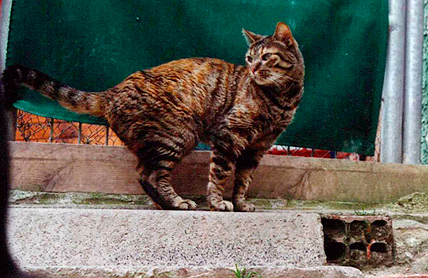
It’s not an easy task to make an average cat behavior profile. They’re not easy to understand when they have some kind of disorder in their behavior, maybe we will come up just with the opposite idea. It’s easy to get to know a cat that has no problems. These ones seem to follow the same habits: they play, sleep, eat, they look for a friendly lap, they hunt (anything...)
Issues come when something goes wrong and our knowledge gets reduced to almost zero. We do not know how to act nor how to deal with that situation. We do not know what’s going on with them and above all, we do not know why is all that happening. Most of the times what happens to our cats is our fault. The main problem of our cats is our lack of information in cat behavior: our fears, some things we believe in, our principles, what we believe about them, what somebody told us, something we read in internet, our anguish when we have to face those situations... There are many reasons that could confuse us and take us to make the wrong decision like the isolation of the cat, to get rid of it or even to abandon it.
Almost all problems that cats suffer have a solution. What we need is to get to know them better as feline animals and put into practice norms of behavior that they, as cats, can understand naturally. Often human solutions aren’t very advisable. Maybe they get us through but it will be very likely to have secondary effects. And we don’t want to see those effects.
Sometimes when we try to help them we in fact confuse them. Often our solutions are simply temporary and they will never take us to and end. We will have better times than others but will never feel 100% happy. So on goes time and even years leaving the impression that cats are weird creatures, or mysterious or impossible to understand. But the real question is: do I treat my cat properly? It doesn’t mean that we maltreat them but maybe what they get is not what they need or what is good for them.
Cats are simply unknown animals. Their independent and self-sufficient nature can make them animals that need nothing and nobody when things go wrong. They seem to block themselves apart and also looks like there’s nothing to do, but it’s a false appearance. Cats react differently or try to find a place to hide when we can’t offer them those norms of behavior that will take them to their inner peace, which is so important for them. Essential
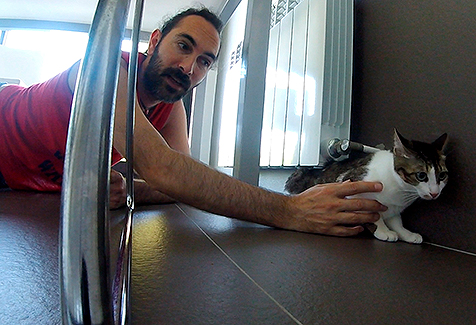
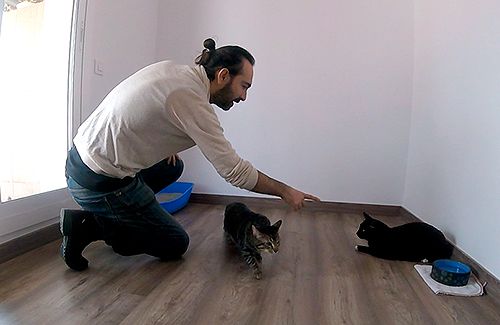
Since 2004 I visit cats regularly and I’ve seen many different kind of problems. Fights, cats getting friends with cats, people and cats getting friends, not using the litter tray (when no garden around) and bored cats are the most common problems. Everything’s got a reason why and a possible solution. Cats don’t change their behavior just for the sake of it. We are missing some details somewhere at some point to know what’s wrong with our cat.
The best cat ethology is the one that looks problems from a cat point of view, the one that bothers what cats need instead of bothering what inconveniences the cat brings to our life. The cat will always be the reference. This is one of their secrets. They give us the line to follow and we just follow. But it doesn’t mean they can do anything they want. It only means that we can not violate their norms of behavior, whichever they are. All cats have similar norms but non exactly the same. Depending in the character of the cat and what happened in its life, the steps to follow will be slightly different.
Do not believe everything you read, mainly in internet. You could end up really upset. Adopt a natural attitude and be calm to face all problems. Stress, anguish and a bad life quality won’t be helpful at all. Cats are very smart so treat them like that. They are not animals without common sense, provably is a lot better than ours. Interact with your cat daily and do not miss your relationship. Use love and kindness to win your cat’s affection instead of using some delicious snack. Provably snacks won’t be there tomorrow but you are always there. Trust yourself before to rely your success on some food.
If you can’t see any solutions get in touch with a cat behavior professional, because not all animal behavior experts know enough about cats.
Jordi, september 2009
I was born in January 1975 and I consider myself an animal lover. I’m not a vetinarian nor an ethologist.
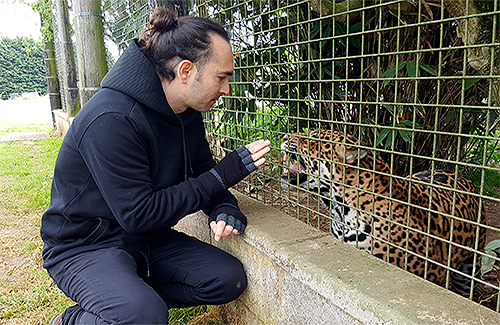
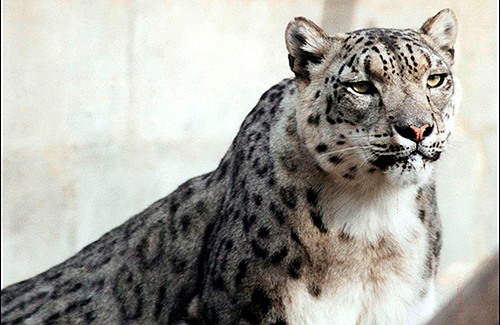
In the year 2000 I moved to England to work as a volunteer at The Cat Survival Trust, which is a charity that helps wildcats. Their motto is: Working to Give Wild Cats a Future. I spent over a year and a half feeding and taking care of over 50 wildcats. Some of them were Snow Leopards (really endangered species), different kinds of lynxs like the Siberian Lynx (huge), the Scandinavian Lynxs (white in the winter and brown in summer), canadian Bobcats (related to our almost disappeared Iberian Lynx), Eurasian Lynxs, African Caracals, Servals, some Scottish Wildcats, a few Geoffroy’s Cats (smaller than many domestic cats), a Jungle Cat (south-east Asia), and a Fishing Cat... This opened me a door to a world where I could learn a lot of things. My daily tasks included: feeding, cleaning out the enclosures, building new enclosures, keeping a good eye on the babies or pregnant ones if that was the case, and strimming the grass that never stops growing in that country...
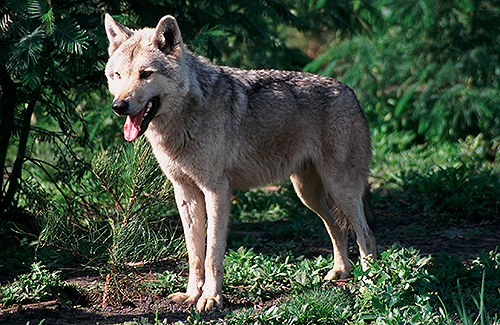
Then I spent more than 5 months in South Africa. I volunteered at The Tsitsikamma Wolf Sanctuary, a Siberian Wolves Rescue Center situated in the Tsitsikamma Natural Park, where I was in charge of raising six Siberian Wolf puppies confiscated by the police. The priority was to avoid as much human contact as possible and I was asked to do it. So I was the only human they saw during this period of time and I was some kind of mother to them. I used to feed them, cleaning the enclosure out, and I also played with them. I was a hot energy centre to rely on... At the end of my time in South Africa I successfuly managed to introduce them to two grown up females who lived together in one enclosure. Altough there was a chance this would fail it turned out to be a success. Within a few visits the puppies started to ask for some regurgitated food and the mother reciprocated. In fact, they were very happy to have the puppies playing around now and again.
A few months later after my return to Barcelona I started to work at the CAAC, a cat and dog haven. This was at the beginning of 2003 when the law changed and didn’t allow euthanasia in such places just for the sake of it. Otherwise, I would not have worked there. Fundació Altarriba a local animal charity who managed the centre was the perfect host. During the year and a half that this charity ran the center, I was in charge of the domestic cats and we ended up having a stable cat colony of 150 individuals. We saw many cats, too many. Some of them died but others made it. The last ones we received were there because they had been abandoned, suffered accidents, wounds, surgery, mistreatment, humiliation, cold and starvation, or fear and anguish... but also many of them found a new home. The adoption program was not as successful as we hoped, but many families came up to the CAAC to find a new family member. And they found it.
Today I have a full time job in some company but in my spare time I try to help cats with behaviour problems and their families. Maybe one day I’ll be able to write that all my time goes to them.